
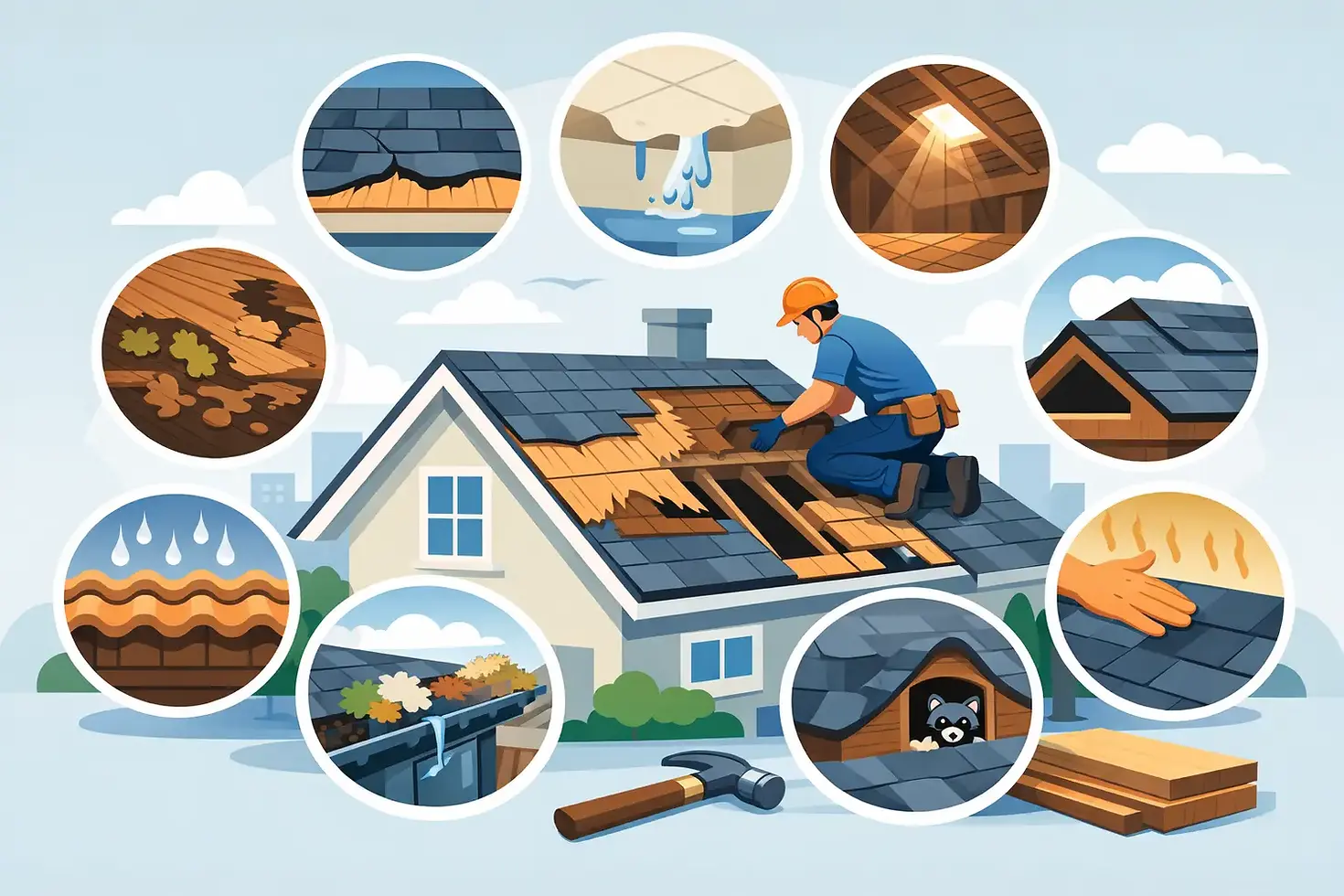
8 Signs You Need Roof Decking Replaced
A roof can look fine from the street and still have serious structural problems underneath. One of the clearest signs you need roof decking replaced is when the surface materials seem to be failing for no obvious reason - shingles curling early, soft spots developing, or leaks showing up again after repairs.
Roof decking is the wood layer attached to your roof framing. It sits beneath the shingles or other roofing material and gives the entire system a solid base. When that wood is weakened by moisture, age, poor ventilation, or storm damage, the problem does not stay hidden for long. It affects how your whole roof performs.
For homeowners and property owners in Indianapolis, this matters even more because freeze-thaw cycles, heavy rain, wind, and ice can push a marginal roof system past its limit. Knowing what to watch for helps you catch damage early and avoid paying for surface repairs when the real issue is underneath.
What roof decking does and why it matters
Roof decking is not the part you see, but it is one of the parts that carries the most responsibility. It supports the roofing materials, helps distribute weight, and gives fasteners a secure surface to hold onto. If the decking is weak, shingles and underlayment cannot do their job the way they should.
This is why a roof replacement sometimes turns into more than just replacing shingles. Once old materials are removed, damaged decking may be exposed. In some cases, only a few sections need to be changed. In others, the deterioration is widespread enough that larger portions of the roof deck have to be replaced before a new roof can be installed correctly.
8 signs you need roof decking replaced
1. Your roof feels soft or looks uneven
A sagging roofline is never something to ignore. If part of the roof dips, bows, or looks uneven, the decking may have lost its strength. That can happen when moisture gets into the wood over time and causes it to rot or delaminate.
Inside the attic, this may show up as visible warping between rafters. From the outside, you may notice a subtle depression that becomes more obvious after rain or snow. Not every uneven roof means the decking is the problem, but it is a strong sign that the structure needs a close inspection.
2. You have recurring leaks in the same area
A single leak does not always mean the decking is bad. Sometimes the issue is damaged flashing, missing shingles, or a failed pipe boot. But if leaks keep coming back in the same section even after repairs, there may be water-damaged decking underneath.
Once wood stays wet long enough, it stops holding nails properly and becomes vulnerable to rot. At that point, patching the outer roofing material may only buy you time. The leak source may be addressed, but the weakened deck remains.
3. Shingles are sagging, lifting, or failing early
Shingles need a stable, solid surface beneath them. If the decking is soft, swollen, or deteriorated, shingles can start to look distorted. They may not sit flat, and nails may loosen more easily.
This is one of the more overlooked signs you need roof decking replaced because many property owners assume the shingles themselves are defective. Sometimes they are. But when roofing materials fail far earlier than expected, the condition of the deck should be part of the conversation.
4. You see water stains or mold in the attic
Your attic often tells the truth before the rest of the house does. Water stains on the underside of the roof deck, darkened wood, mold growth, or a musty smell can all point to moisture problems that may have already compromised the decking.
There is some nuance here. Light staining does not always mean the wood needs replacement. If the leak was brief and the decking dried fully without losing integrity, it may still be serviceable. But if the wood is soft, crumbling, or mold is widespread, replacement is often the safer long-term fix.
5. The decking looks rotted or spongy during an inspection
This is the most direct sign. When a roofing contractor walks the roof or inspects from the attic and finds wood that feels soft, flakes apart, or shows visible rot, the decking is no longer doing its job.
Plywood and OSB do not need to be completely disintegrated to be a problem. Even partial deterioration can reduce fastening strength and compromise the performance of the new roofing system. That is why honest roof assessments matter. A contractor should show you where the damage is and explain whether spot replacement or broader replacement makes sense.
6. Nails are popping or not holding
Roofing nails should stay anchored in solid decking. If they begin backing out, or if shingles seem loose because fasteners are no longer gripping properly, weak decking may be the cause.
This can happen after long-term moisture exposure, but it can also show up in older roofs where the wood has simply degraded over time. In Indiana weather, repeated expansion and contraction can make these issues worse. If the deck is not secure, your roof becomes more vulnerable to wind damage and water intrusion.
7. Daylight is visible through the attic boards
If you can see light coming through areas that should be fully sealed, that is a sign something is wrong. Small gaps can sometimes be related to construction details, but visible openings caused by broken, separated, or deteriorated decking should be investigated right away.
Where light comes in, water and outside air usually can too. That affects not only your roof system, but also insulation performance and indoor comfort. For commercial buildings and homes alike, hidden deck damage can quietly increase repair costs if it is left in place.
8. Your roof is being replaced and damaged decking is exposed
Sometimes you do not know the decking has failed until tear-off begins. This is common on older roofs or roofs that have had multiple layers installed over time. Once the old shingles are removed, soft spots, staining, rot, and separated panels become much easier to see.
This is also the point where shortcuts become expensive. Installing a new roof over compromised decking may save money that day, but it often leads to premature failure, voided manufacturer expectations, and more repairs later. A quality roof system starts with a sound foundation.
What causes roof decking to fail
Moisture is the biggest reason roof decking needs replacement. Leaks from damaged shingles, flashing failures, ice dams, and poor ventilation can all trap water where it should not be. Over time, the wood absorbs that moisture and weakens.
Age is another factor. Older decking materials may not perform like modern materials, especially if they have been exposed to years of seasonal movement and humidity. Storm damage can speed this up, particularly when wind-driven rain gets beneath roofing materials.
Poor attic ventilation also plays a larger role than many people realize. When hot, humid air gets trapped in the attic, condensation can build on the underside of the decking. The damage is gradual, but it adds up.
Does all roof decking need to be replaced?
Not always. This is where experience and honesty matter. In many cases, only the damaged sections need to be removed and replaced. If the rest of the roof deck is dry, solid, and structurally sound, a partial replacement may be the right call.
On the other hand, widespread rot, repeated leaks, or major structural sagging can mean a more extensive replacement is necessary. The right answer depends on how much of the decking is affected and whether the remaining wood can still support a new roof properly.
A trustworthy contractor should not guess. They should inspect, document what they find, and explain the scope clearly before moving forward.
What to do if you suspect decking damage
If you have noticed any of these signs, the next step is a professional roof inspection. This is especially important before a full roof replacement, after storm damage, or if you are seeing leaks and attic staining. Catching decking issues early can keep them from spreading into rafters, insulation, drywall, and interior finishes.
At 3 Kings Roofing and Gutters, we believe homeowners deserve straightforward answers about what is happening on their roof and why. If decking replacement is needed, it should be explained clearly, priced transparently, and done the right way so the new roof has a solid base to protect your property for years to come.
When your roof starts sending warning signs, it is worth paying attention before a hidden problem turns into structural damage.


Comments