
How to Prevent Ice Dams on Your Roof
A few inches of snow on the roof can look harmless. The trouble starts when your attic is warm, the roof deck heats unevenly, and melting snow refreezes at the colder eaves. If you are wondering how to prevent ice dams roof issues before they turn into leaks, the answer starts inside the house as much as it does on top of it.
Ice dams are not just a winter nuisance. They can force water under shingles, stain ceilings, damage insulation, and contribute to gutter strain along the roof edge. In Indianapolis, where winter weather can swing above and below freezing in short stretches, those conditions are common enough that prevention matters.
What causes ice dams on a roof
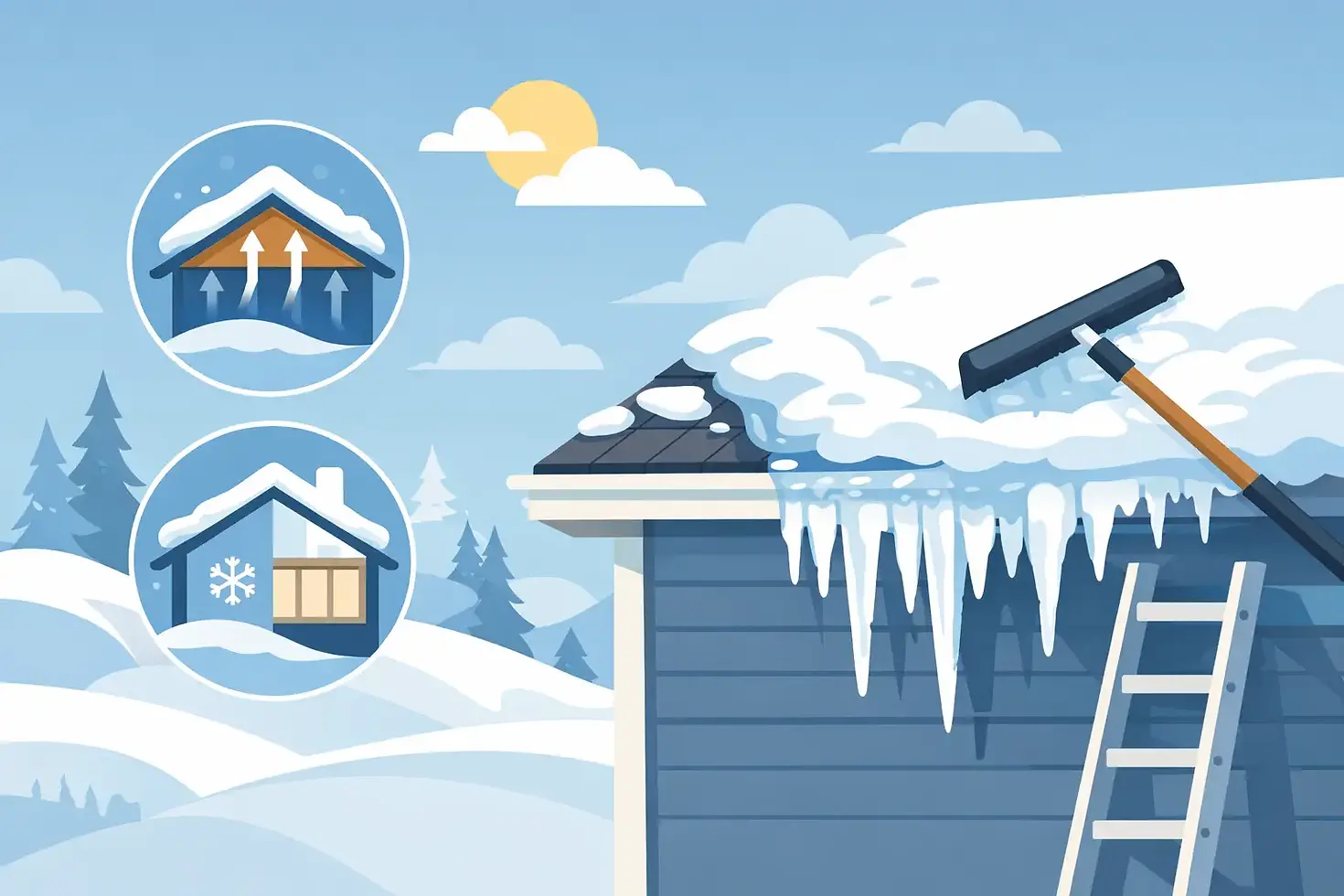
An ice dam forms when snow melts higher up on the roof and then refreezes near the edge. The upper portion of the roof is often warmer because heat escapes from the living space into the attic. The eaves stay colder because they extend beyond the home and are exposed to outside air on both sides. That temperature difference is what sets the cycle in motion.
Poor attic insulation is a major factor, but it is not the only one. Air leaks from recessed lights, attic hatches, plumbing penetrations, and duct chases can push warm air upward. Inadequate ventilation can trap that heat. Clogged or poorly sloped gutters can make drainage worse. Heavy snow followed by a sunny day and a freeze at night can speed the process along.
That is why a simple roof rake is only part of the conversation. If the house keeps feeding heat into the attic, the problem usually comes back.
How to prevent ice dams roof problems at the source
The most reliable prevention plan focuses on temperature control, airflow, and water management. You want the roof surface to stay as consistently cold as possible in winter so snow does not melt unevenly.
Start with attic insulation
Insulation helps keep heat where it belongs - inside your living space. When attic insulation is thin, uneven, or compressed, warmth escapes through the ceiling and raises the roof temperature from below.
In many homes, adding insulation is one of the most effective ways to reduce ice dam risk. The right insulation level depends on the home’s design and what is already in place. More is not always better if air leaks are still present, because warm air can move through gaps no matter how much insulation you install around them.
If your upstairs rooms are hard to keep comfortable in winter, or if snow melts off your roof in patches while your neighbors still have even coverage, that is often a sign your insulation needs attention.
Seal attic air leaks before adding more insulation
This step is often overlooked. Warm air moves faster through holes and gaps than through insulated surfaces. That means air sealing can have a bigger effect than many homeowners expect.
Common leak points include attic access panels, bath fan housings, light fixtures, plumbing stacks, and wiring penetrations. Sealing those openings helps stop heat loss and moisture movement into the attic. It also improves the performance of your insulation.
This is one area where the details matter. The wrong materials near heat-producing fixtures can create safety issues, so inspection and proper installation are important.
Make sure attic ventilation is working correctly
A well-ventilated attic helps maintain a cold roof deck by allowing outside air to move through. Intake vents at the soffits and exhaust vents near the ridge typically work together to create that airflow.
If soffit vents are blocked by insulation, the system cannot draw air properly. If a roof has too much exhaust and not enough intake, ventilation can still underperform. Every roof design is a little different, so the best setup depends on the home.
Good ventilation is not about making the attic warm air disappear on its own. It works best when combined with solid insulation and air sealing. Think of it as part of a system rather than a standalone fix.
Roof and gutter details that help prevent ice dams
Once attic conditions are addressed, the exterior of the home still plays an important role.
Gutters do not cause most ice dams, but clogged gutters can make water back up faster at the roof edge. If leaves, granules, or debris are blocking the flow, melting snow has fewer places to go.
Clean gutters and downspouts before winter. Make sure water can move freely away from the home. If sections are loose, sagging, or pitched incorrectly, they should be corrected. Well-installed gutters support drainage, while damaged ones can add to the problem.
Check flashing and roof edge protection
Even with prevention efforts, severe winter conditions can still test a roof. That is where quality installation matters. Ice and water shield along vulnerable roof edges and valleys can provide an extra layer of defense if water backs up under shingles.
This is especially important on homes that have had repeated winter leak issues or roofs with complex transitions. It is not a substitute for fixing insulation and ventilation, but it does add protection in high-risk areas.
Watch roof design and trouble spots
Some roofs are more vulnerable than others. Low-slope sections, long eaves, valleys, and areas under large snow loads are more likely to develop ice buildup. Skylights and chimneys can also create uneven melt patterns if surrounding insulation or flashing is lacking.
If ice dams happen in the same location every winter, that pattern usually points to a specific issue rather than just bad weather.
What homeowners can do during winter
Prevention should start before the first snow, but there are still practical steps you can take during the season.
Using a roof rake from the ground to remove snow from the lower few feet of the roof can reduce the chance of refreezing at the eaves. It is a safer option than climbing onto an icy roof. Be careful not to scrape shingles aggressively, especially on older roofs.
If you already have an ice dam, avoid chopping at it with tools. That can damage shingles, underlayment, gutters, and flashing. Calcium chloride ice melt in a fabric tube is sometimes used to create a drainage channel, but this is a temporary measure, not a full solution. Rock salt should be avoided because it can damage metal and roofing materials.
If water is actively entering the home, it is time to call a professional. Steam removal is often the safest way to remove a heavy ice dam without tearing up the roof.
When prevention calls for a professional inspection
Some homes need more than one fix. That is common. Ice dams are often the result of several smaller issues working together - a little heat loss, uneven insulation, blocked soffits, and poor gutter drainage. Addressing just one piece may help, but it may not solve the whole problem.
A professional roof and attic inspection can identify where heat is escaping, whether ventilation is balanced, and whether the roof system has the right protections in place. For homeowners in central Indiana, local experience matters because freeze-thaw cycles, wet snow, and aging roof systems all affect how these problems show up.
At 3 Kings Roofing and Gutters, that kind of inspection is approached the same way every good repair should be handled - with clear communication, straightforward findings, and recommendations that match the home instead of a one-size-fits-all sales pitch.
The best long-term strategy
If you want to know how to prevent ice dams roof issues year after year, focus on the house as a system. Keep warm air out of the attic. Make sure insulation is doing its job. Give the attic proper ventilation. Keep gutters draining. And make sure the roof edge is built to handle winter conditions.
Some fixes are simple maintenance. Others involve insulation upgrades, ventilation corrections, or roofing improvements. The right answer depends on the age of the home, the roof design, and whether you are dealing with prevention or repeated damage.
A roof should protect your home in every season, not become a source of avoidable winter leaks. When ice dams keep showing up, they are usually telling you something useful. Catch the cause early, fix it correctly, and winter gets a lot less stressful.



Comments