

Roof Rejuvenation vs Replacement Costs
A roof can look worn from the street and still have years of service left in it. It can also look mostly fine and be hiding enough damage that repairs or coatings will only delay a bigger problem. That is why roof rejuvenation vs replacement costs is not just a pricing question. It is a value question, and the right answer depends on the roof’s age, condition, material, and what you expect from the property over the next several years.
For homeowners and property managers in Indianapolis, the stakes are real. Hail, wind, heavy rain, summer heat, and freeze-thaw cycles all take a toll. If you are deciding whether to extend the life of your existing roof or invest in a full replacement, it helps to look past the initial invoice and focus on what you are truly buying.
Roof rejuvenation vs replacement costs: what changes the price
Roof rejuvenation is usually the lower-cost option upfront. In most cases, it involves treating an aging asphalt shingle roof with a rejuvenating product designed to restore flexibility, reduce brittleness, and improve performance. Some services also include minor repairs, sealing vulnerable areas, and replacing a limited number of damaged shingles.
Roof replacement is a much larger project. It typically includes tear-off of old materials, inspection of the roof deck, underlayment, flashing, ventilation adjustments, and installation of a new roofing system. That is why replacement costs are significantly higher than rejuvenation costs.
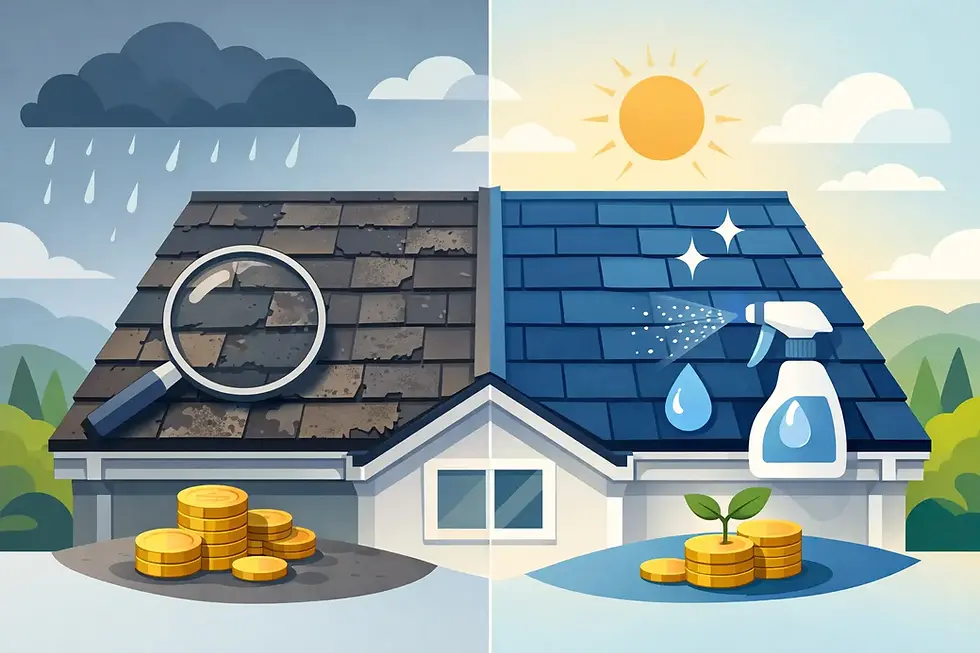
The real price difference comes down to scope. Rejuvenation works on the existing roof system. Replacement starts over with a new one. One is a preservation strategy. The other is a reset.
In practical terms, rejuvenation may cost a fraction of what replacement costs, but only when the roof is still a good candidate. If the roof has widespread leaks, soft decking, major storm damage, failed flashing, or advanced shingle loss, rejuvenation may not be money well spent. Paying less now does not help if you still need a replacement soon after.
When rejuvenation makes financial sense
Rejuvenation tends to make the most sense on asphalt shingle roofs that are aging but not failing. If shingles are drying out, losing granules gradually, or becoming less flexible, a treatment may help extend usable life. This can be appealing if you are trying to postpone a major capital expense while keeping the roof protected.
For some property owners, timing matters as much as condition. Maybe you are budgeting for several home improvements and need a lower-cost option this year. Maybe you plan to sell in a few years and want to maintain the roof rather than replace it immediately. Maybe the roof is nearing the point where it needs help, but it is not yet at the point of structural concern.
That said, rejuvenation is not a cure-all. It does not rebuild damaged decking. It does not correct installation errors. It does not solve major leak pathways caused by flashing failures or storm impact. A trustworthy contractor should be clear about that.
If a roof qualifies, rejuvenation can be a smart middle-ground investment. You spend less now, buy more time, and avoid replacing materials earlier than necessary. For the right roof, that is real value.
Signs your roof may be a candidate
A roof is more likely to qualify for rejuvenation if it is older but still structurally sound, has limited visible damage, and has not passed the point where shingles are curling badly or breaking apart. Consistent attic ventilation also matters, because trapped heat and moisture can shorten whatever life the shingles have left.
An inspection should come first. No honest pricing discussion means much without knowing what is happening on the roof itself.
When replacement is the better long-term investment
Replacement often carries sticker shock, but there are plenty of cases where it is the more cost-effective decision. If your roof is already leaking in multiple areas, showing signs of decking deterioration, or nearing the end of its service life, paying for rejuvenation may only delay the inevitable.
A new roof gives you more than fresh shingles. You get a chance to address underlayment, flashing, ventilation, and hidden trouble spots that cannot be fixed from the surface alone. That broader correction is one reason replacement often delivers better long-term value, especially when the existing system has multiple weaknesses.
There is also the matter of repeat spending. If you pay for rejuvenation now, then face a full replacement in a short window, your total cost goes up. In those cases, a replacement may be the more disciplined financial choice.
For commercial properties and older homes, this is especially important. Water intrusion can damage insulation, interior finishes, equipment, and even structural components. A roof decision should not be based only on what is cheapest at the moment. It should also reflect what risk you are carrying if the roof keeps aging.
Replacement may be worth it if
Replacement is often the right move when storm damage is widespread, leaks are recurring, the roof has already had multiple repairs, or the material is simply at the end of its expected life. It is also worth serious consideration if you want stronger manufacturer-backed protection, better curb appeal, or improved resale confidence.
Cost is not the same as value
This is where many roof conversations go off track. People compare rejuvenation and replacement as if they are buying the same result at two different prices. They are not.
Rejuvenation is usually about extending life. Replacement is about starting fresh. Those are different outcomes, and the better value depends on your timeline.
If rejuvenation adds several dependable years to a roof that is otherwise in good shape, it may offer an excellent return. If replacement gives you decades of service, fewer repair calls, and stronger protection against Indiana weather, that may be the better value even though it costs more upfront.
The right question is not just, "What does it cost?" It is, "What do I get for that cost, and how long can I realistically expect it to last?"
Roof rejuvenation vs replacement costs in Indianapolis
Indianapolis weather makes honest roof assessments even more important. Wind-driven rain, hail events, and winter ice can age a roof faster than many owners realize. A roof that might be a good candidate for rejuvenation in a milder climate may be a poor candidate here if storm wear has already compromised key components.
Local labor, material pricing, accessibility, roof pitch, and the size of the structure all affect replacement costs. Rejuvenation pricing can also vary depending on roof size, shingle condition, and whether repairs are needed beforehand. That is why broad online estimates only go so far.
For local property owners, a detailed inspection from a contractor who understands Indianapolis conditions is the only reliable starting point. The best roofing companies will explain not only what they recommend, but why they recommend it. If a roof can be responsibly preserved, they should say so. If it cannot, they should be just as direct.
At 3 Kings Roofing and Gutters, that kind of transparency matters because customers are not just buying roofing work. They are making a decision about protecting their home or business.
How to decide without overspending
Start with condition, not preference. If the roof is fundamentally sound, ask whether rejuvenation can deliver meaningful extra life. If the roof has deeper issues, ask what replacement would fix that rejuvenation cannot.
Then look at your time horizon. If you plan to stay in the property long term, a replacement may offer stronger value and fewer headaches. If you need a sensible way to extend performance on a roof that still has a solid foundation, rejuvenation may be the smarter use of funds.
Finally, compare total ownership cost rather than just the first invoice. A lower upfront number can still be the more expensive decision if it leads to repeated repairs, interior damage, or a near-term replacement.
A good contractor should walk you through those trade-offs in plain language. No pressure. No inflated promises. Just a clear explanation of what your roof can still do, what it cannot, and what each option is likely to cost you over time.
The best roofing decision is the one that fits the actual condition of your roof, your budget, and your plans for the property. When those three line up, the numbers make a lot more sense.


Comments