
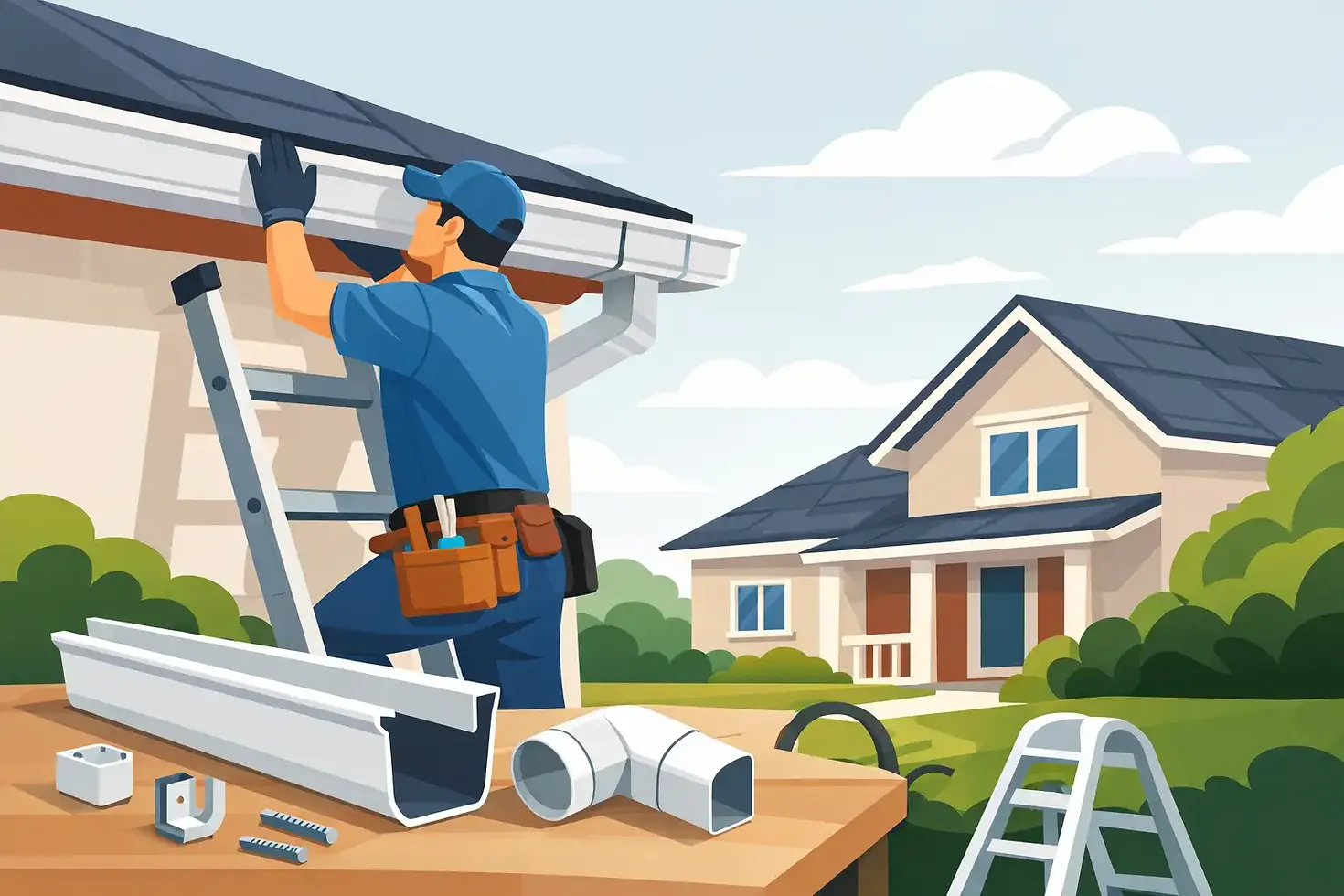
Gutter Installation Services for Homes
A lot of gutter problems start before the first rainstorm. Water overshoots the edge, pools near the foundation, or runs behind the gutter not because gutters "went bad," but because the system was undersized, pitched wrong, or attached to fascia that was already failing. That is why gutter installation services for homes should never be treated like a simple add-on. A well-installed system protects the roofline, siding, landscaping, and foundation every time it rains.
For homeowners in Indianapolis, that matters even more. Heavy spring storms, wind-driven rain, summer downpours, and winter freeze-thaw cycles all put stress on the edge of the roof. Gutters are supposed to manage that runoff in a controlled way. When they do not, small drainage issues can turn into wood rot, basement moisture, ice problems, and premature exterior repairs.
What good gutter installation services for homes actually include
A quality gutter project starts with the home, not with a one-size-fits-all product. The installer should look at roof size, roof slope, valley locations, overhang depth, fascia condition, and the way water moves across the property. That evaluation determines more than the gutter style. It also affects downspout placement, hanger spacing, outlet size, and whether larger gutters are needed.
This is where many homeowners run into trouble with bargain quotes. Some companies price gutters by the linear foot and leave out the design side of the job. The result may look fine from the driveway, but performance tells the real story when the next hard rain hits. A lower price up front can mean more overflow, more clogs, and a shorter life span.
A dependable installation should also include a conversation about the existing roof edge. If fascia boards are soft, split, or covered over without inspection, the new gutters are being fastened to a weak surface. That does not hold up well over time. Honest contractors point that out early, explain the repair options, and make sure the new system has solid backing.
Choosing the right gutter size and material
Not every home needs the same gutter system. Standard 5-inch gutters work well for many houses, but they are not the right answer for every roof. Larger roof planes and steep slopes can send a surprising amount of water to the edges very quickly. In those cases, 6-inch gutters and larger downspouts may be the better long-term choice.
Material matters too. Aluminum is a common choice for residential gutters because it is lightweight, rust-resistant, and available in many colors. It also offers a good balance of durability and value. Steel can be stronger, but it is heavier and can be more vulnerable to rust if coatings are damaged. Copper is attractive and long-lasting, but it comes at a premium price that does not fit every budget.
For most homeowners, the decision comes down to performance, appearance, and maintenance expectations. There is no single best option for every property. A practical installer explains the trade-offs clearly instead of pushing the most expensive upgrade.
Seamless gutters vs. sectional gutters
Most homeowners benefit from seamless gutters. They are custom-formed on site to fit the house, which means fewer joints along the run. Fewer joints generally mean fewer places for leaks and debris buildup. They also tend to look cleaner on the home.
Sectional gutters can still be used in some situations, especially for repairs or specific architectural layouts, but they have more connection points. More joints often mean more maintenance over time. If a homeowner is looking for a new full system rather than a small repair, seamless usually makes the most sense.
That said, seamless does not mean maintenance-free. If the pitch is off or the downspouts are poorly placed, even a seamless system can overflow. The fabrication method helps, but proper design and installation still carry most of the load.
Why drainage design matters as much as the gutter itself
Homeowners often focus on the visible part of the system, but downspouts and discharge locations are just as important. Gutters collect water. Downspouts move it away from the structure. If that second step is handled poorly, the system is only doing half the job.
A good installer will look at where the water goes after it leaves the downspout. If it drains right next to the foundation, onto a walkway, or toward a low spot in the yard, the property can still have moisture problems. Extensions, splash blocks, underground drainage, or revised downspout placement may be needed depending on the lot.
This is one of those areas where local experience matters. Indianapolis properties vary widely in grading, mature landscaping, and drainage conditions. What works on one home may not work on the house next door. Practical recommendations should match the site, not just the standard package.
Signs it is time for new gutters instead of another repair
Some gutter issues can be fixed. A loose hanger, minor seam leak, or isolated dent does not always mean full replacement. But repairs stop making sense when the problems are widespread or tied to the age and design of the system.
If gutters pull away from the house, overflow during normal rain, show recurring leaks at multiple joints, or dump water near the foundation despite repeated fixes, replacement is often the smarter investment. The same is true when rust, corrosion, sagging runs, or damaged fascia start showing up together. At that point, patchwork repairs can cost more over time while still leaving the house exposed.
Older systems may also be undersized for the roof they serve. If a home has additions, steep roof sections, or large valleys feeding into a short run, a properly designed new system can solve problems that repairs never will.
What the installation process should look like
Professional gutter installation should feel organized and straightforward. The home should be measured carefully, the roof edge inspected, materials and colors confirmed, and drainage needs discussed before fabrication starts. If fascia or soffit repairs are needed, that should be addressed before the new gutters go up.
On installation day, the crew should remove old materials cleanly, secure the new gutters with proper spacing and slope, and test drainage before wrapping up. The downspouts should be firmly attached, outlets properly sized, and discharge points clearly explained to the homeowner.
Communication matters here. Homeowners should know what is being installed, why those recommendations were made, and what the final cost includes. That level of clarity is part of good craftsmanship. At 3 Kings Roofing and Gutters, that kind of direct communication is a core part of how exterior work should be done.
Cost, value, and the questions worth asking
Pricing for gutter installation depends on home size, material choice, gutter width, number of downspouts, roof complexity, and any needed wood repair. Add-ons like gutter guards, underground drainage, or premium finishes also affect the total cost. That is why very low quotes deserve a closer look. They may leave out necessary components or use lighter materials and less secure attachment methods.
A better question than "What is the cheapest option?" is "What system will protect this home well for the next several years?" That answer often lands somewhere between the bare minimum and the top-tier package. The right fit depends on the roof, the lot, and how long the homeowner plans to stay in the house.
When comparing bids, ask whether the quote includes fascia inspection, seamless fabrication, downspout sizing, haul-away, and warranty details. Also ask how the contractor handles drainage at the base of the downspouts. Those details affect performance far more than a color chart or sales pitch.
Gutter guards can help, but they are not a cure-all
Gutter guards can reduce debris buildup, especially in neighborhoods with mature trees. They can also cut down on cleaning frequency and help water move more consistently through the system. For many homes, they are a useful upgrade.
Still, they are not magic. Some guards perform better than others, and no system eliminates maintenance completely. Pine needles, seed pods, and roof grit can still create issues depending on the product and surrounding trees. Guards should be chosen based on the type of debris around the home, not just added automatically because they sound convenient.
A trustworthy installer will explain whether guards make sense for your property and what level of upkeep to expect even with them in place.
The bigger picture: gutters protect more than the roof edge
New gutters are easy to think of as a trim detail, but their job reaches much farther. They help preserve siding, reduce soil erosion, protect entryways, limit splash-back on masonry, and lower the chance of water collecting where it should not. In some cases, they also help prevent moisture issues that homeowners first notice indoors, especially near basements and crawl spaces.
That is why gutter work should be approached with the same care as any other exterior protection system. It is not just about hanging metal along the eaves. It is about controlling water before it has a chance to damage the home.
If your current gutters are overflowing, separating, or simply not keeping up with Indiana weather, it is worth getting a full evaluation instead of another quick fix. The right system should look clean, drain properly, and give you one less thing to worry about the next time the forecast turns rough.



Comments